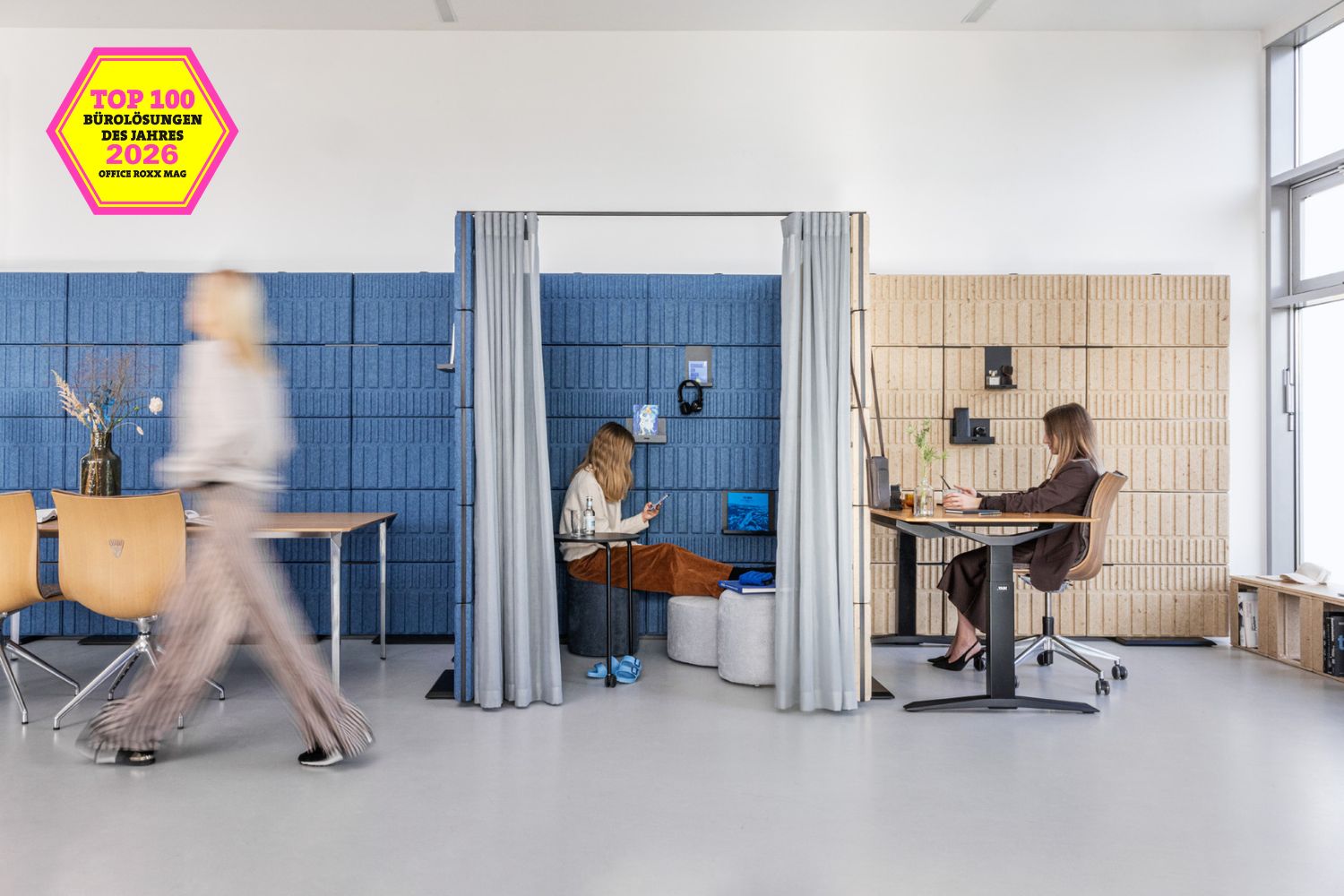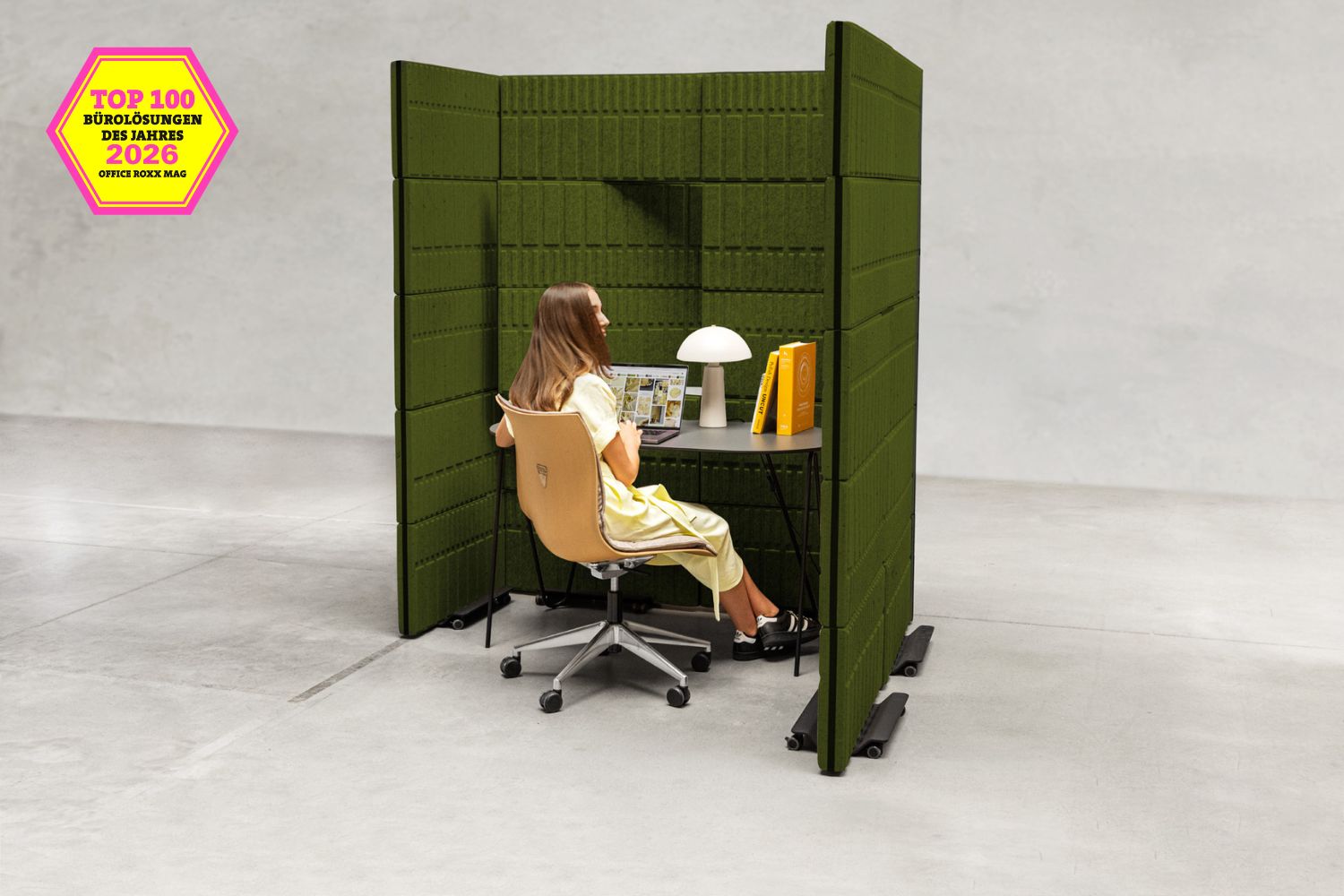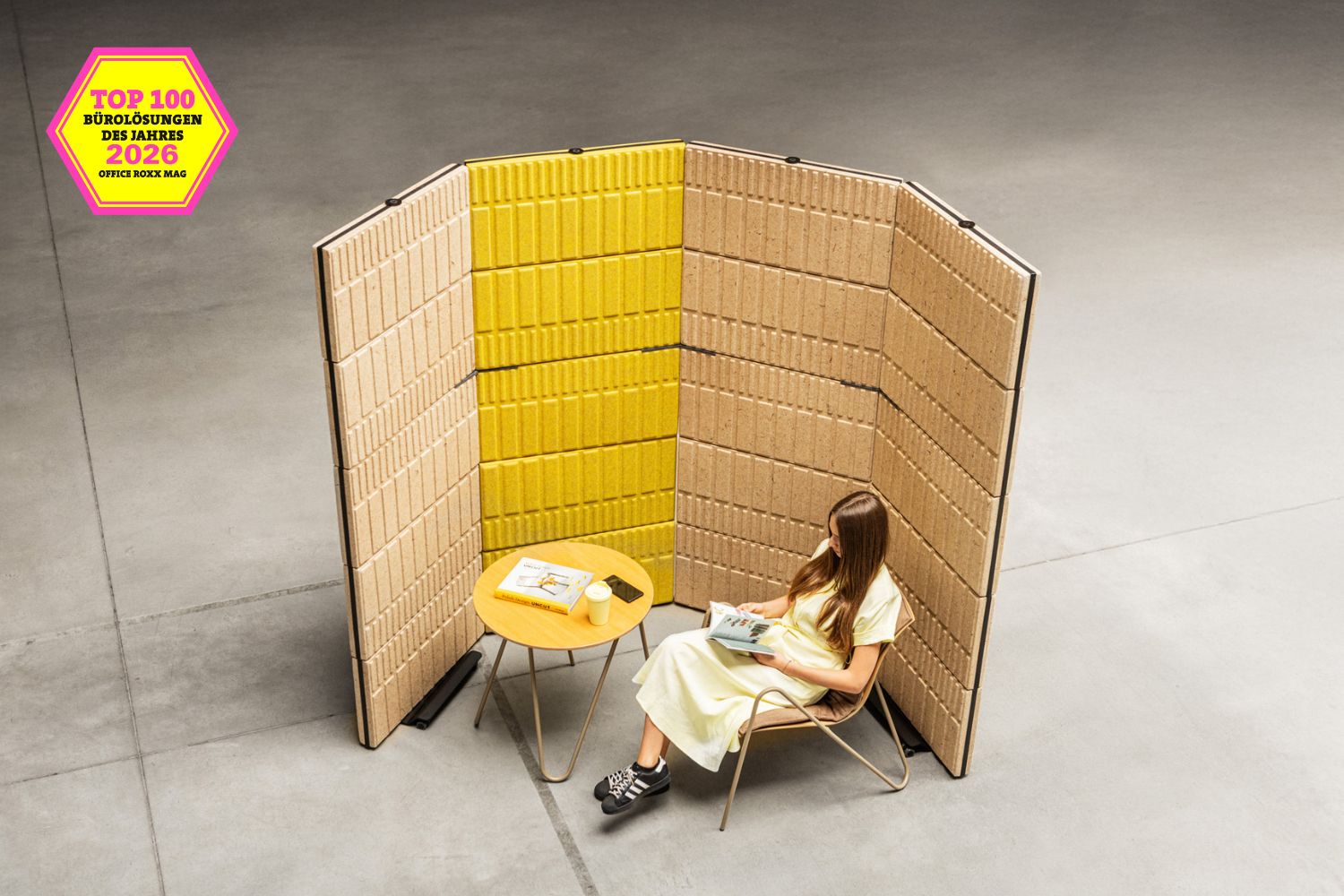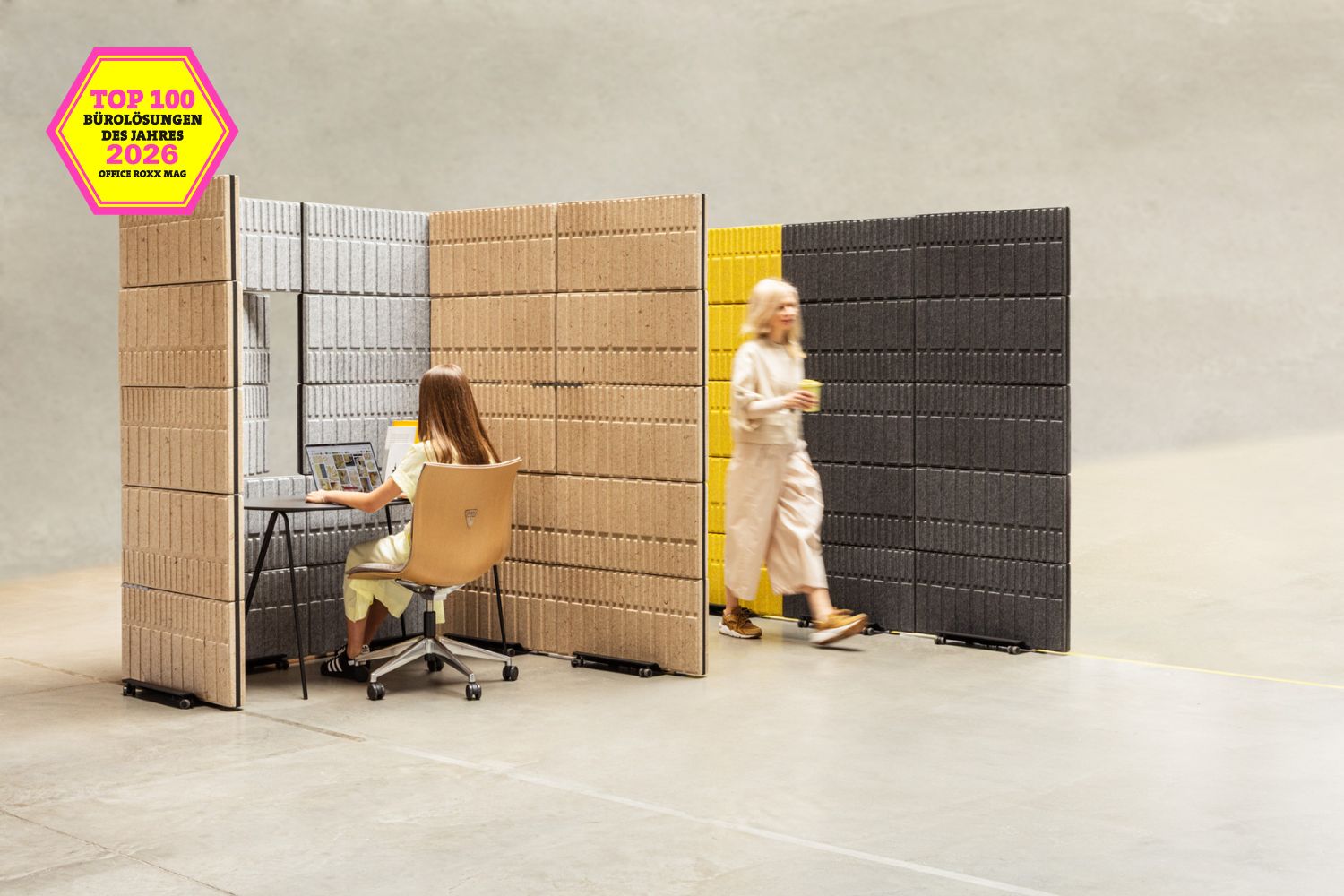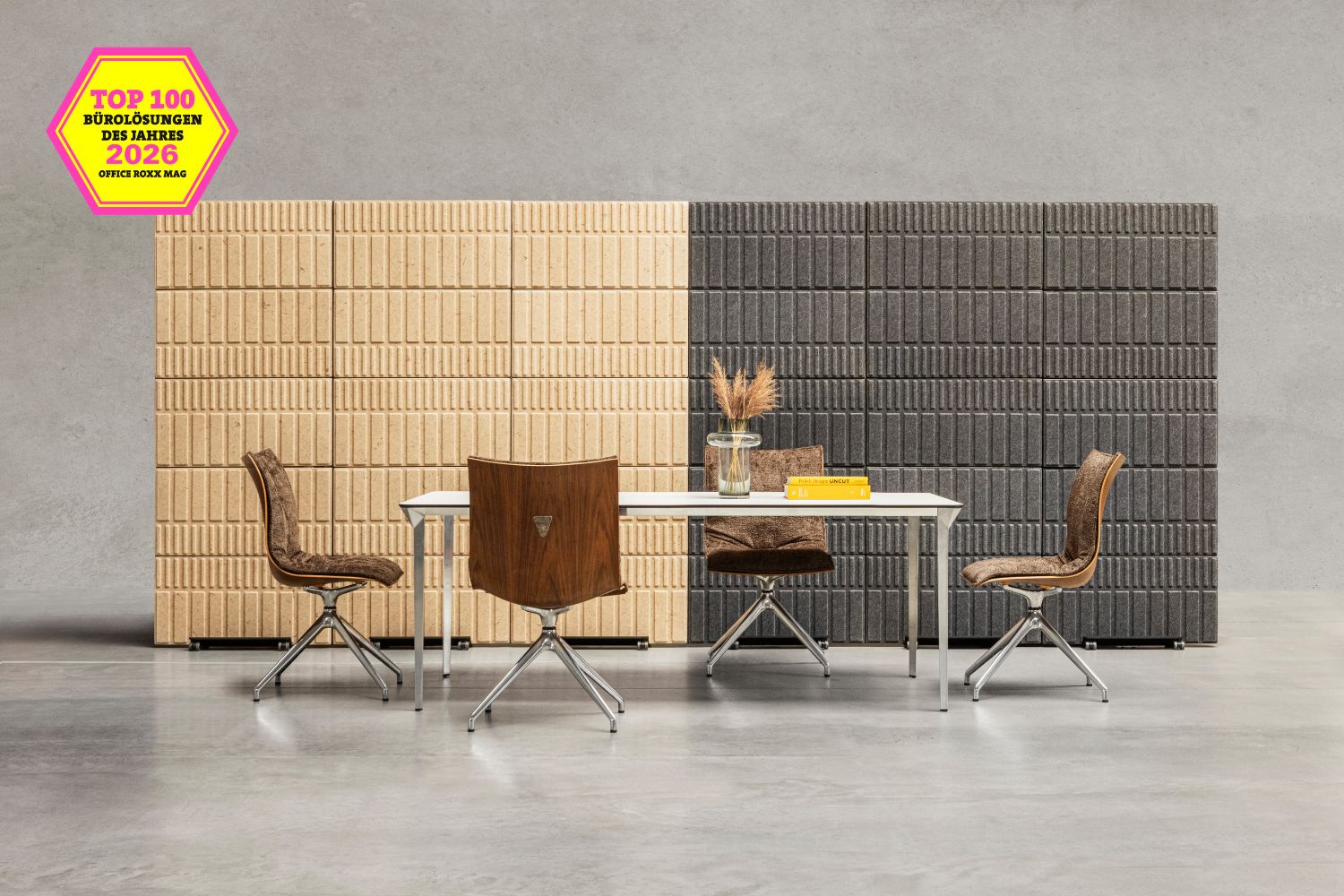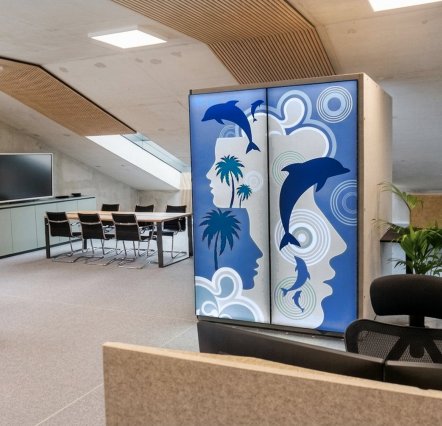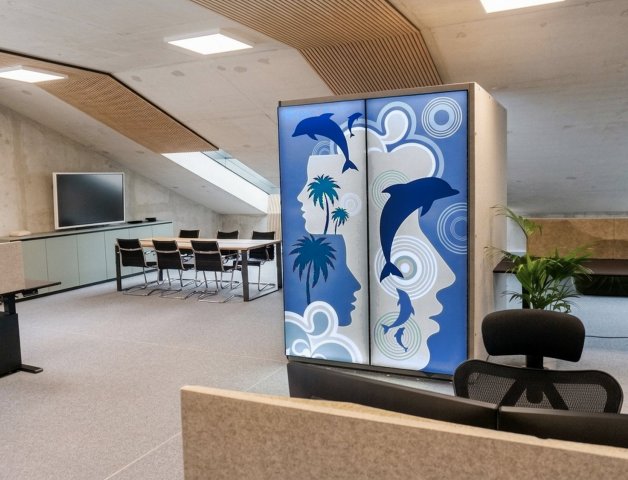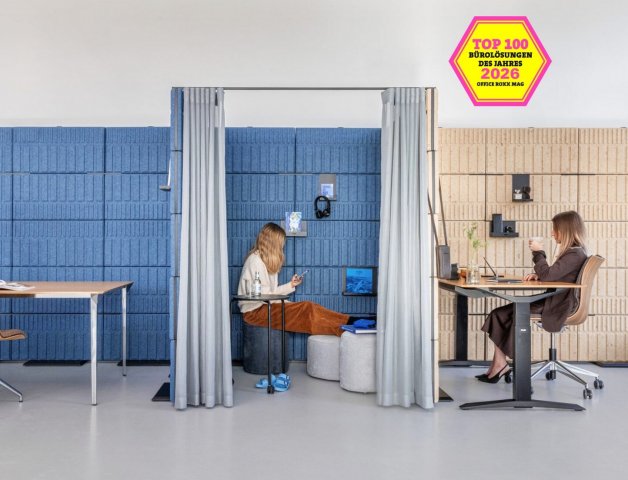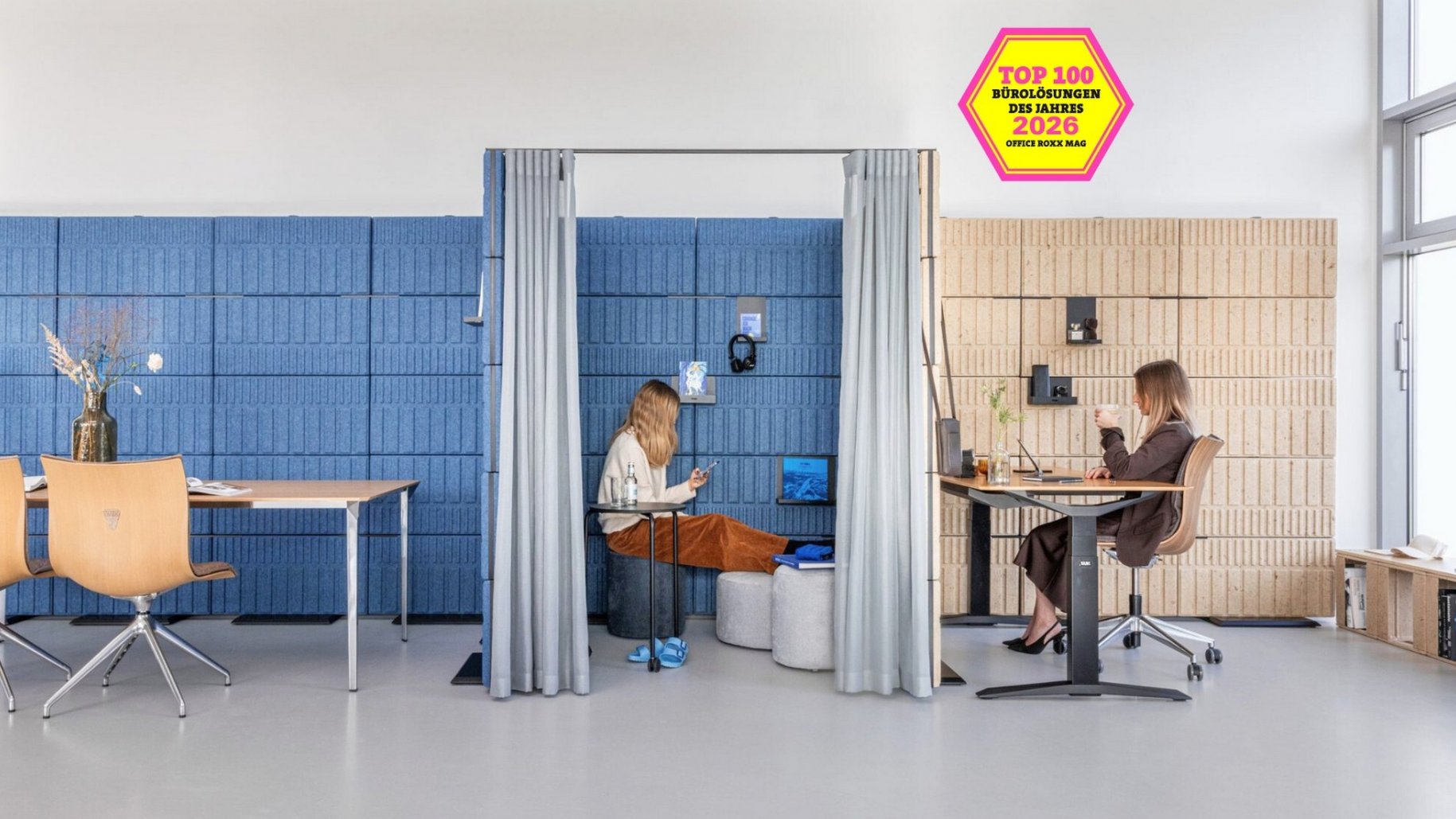
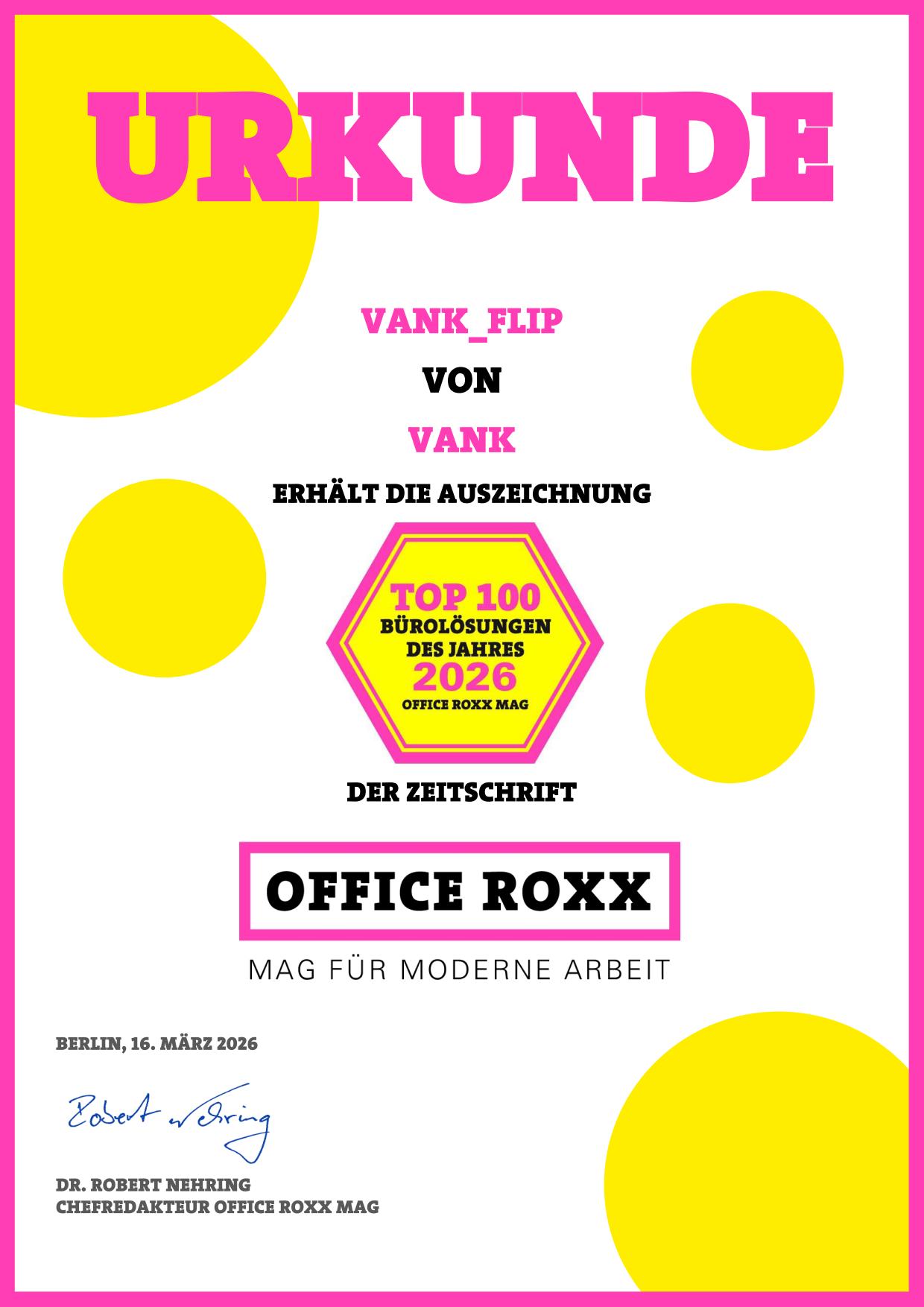
VANK_FLIP ranked #12 in the OFFICE ROXX Top 100 Office Solutions 2026.
The editorial team recognised the system for combining functionality with sustainable design. Mobile walls divide open-plan space without construction work, and the panels are made from plant-based biocomposite or rPET from recycled PET bottles. This confirms that circular design is not a compromise between aesthetics and environmental responsibility, but simply good design.
OFFICE ROXX has been publishing the ranking since 2004. In this year’s edition, VANK_FLIP placed among the top twelve out of more than 1,000 products and services evaluated for functionality, design, productivity, and sustainability.
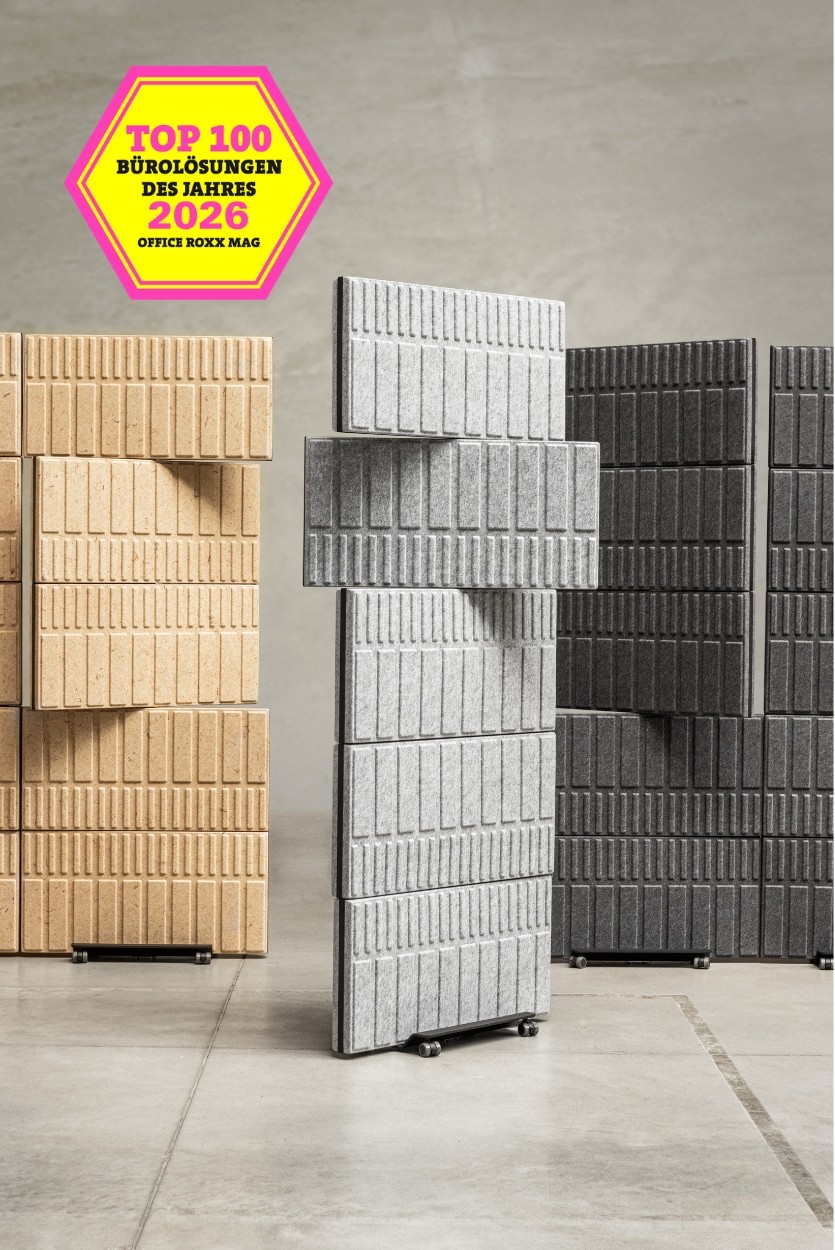
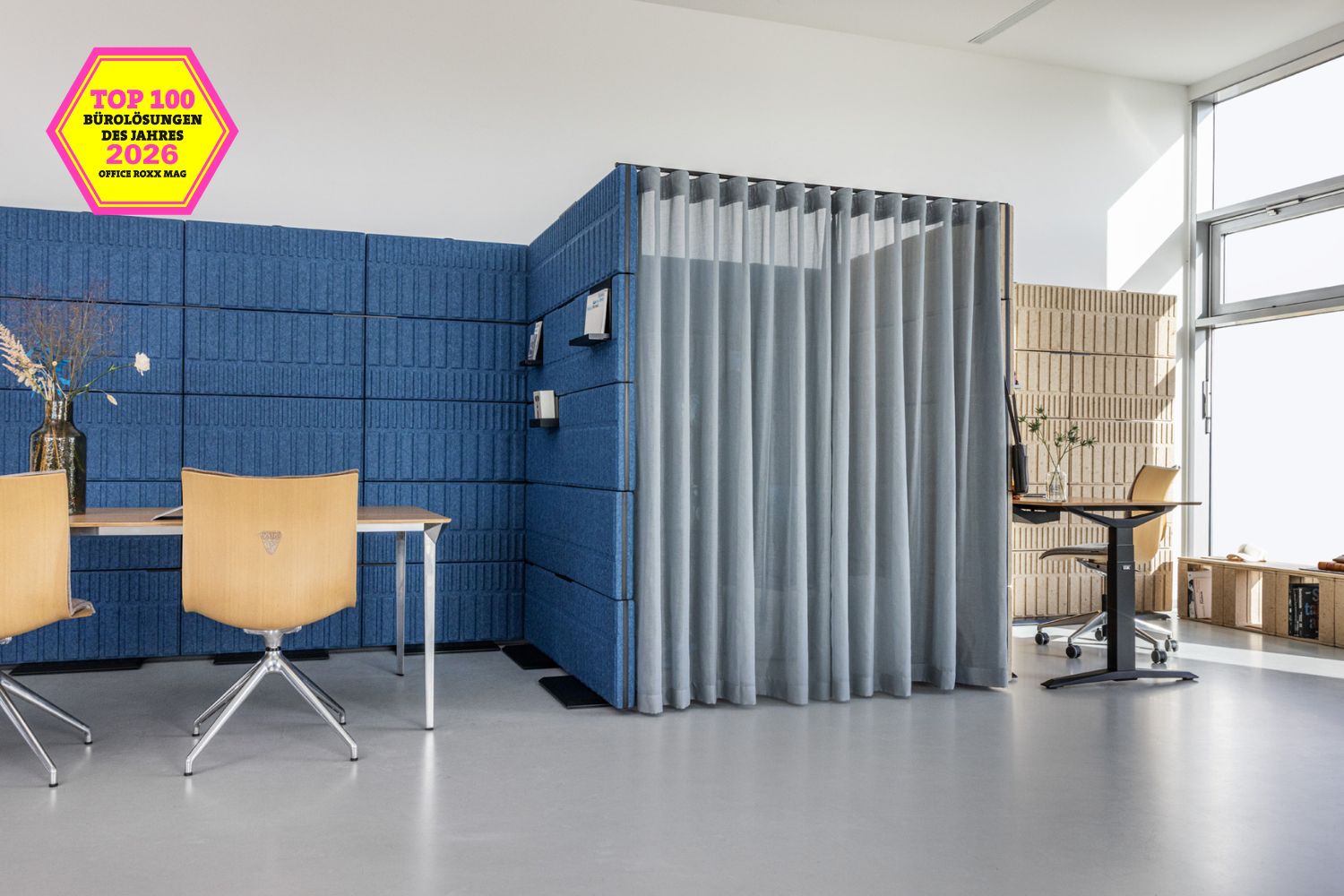
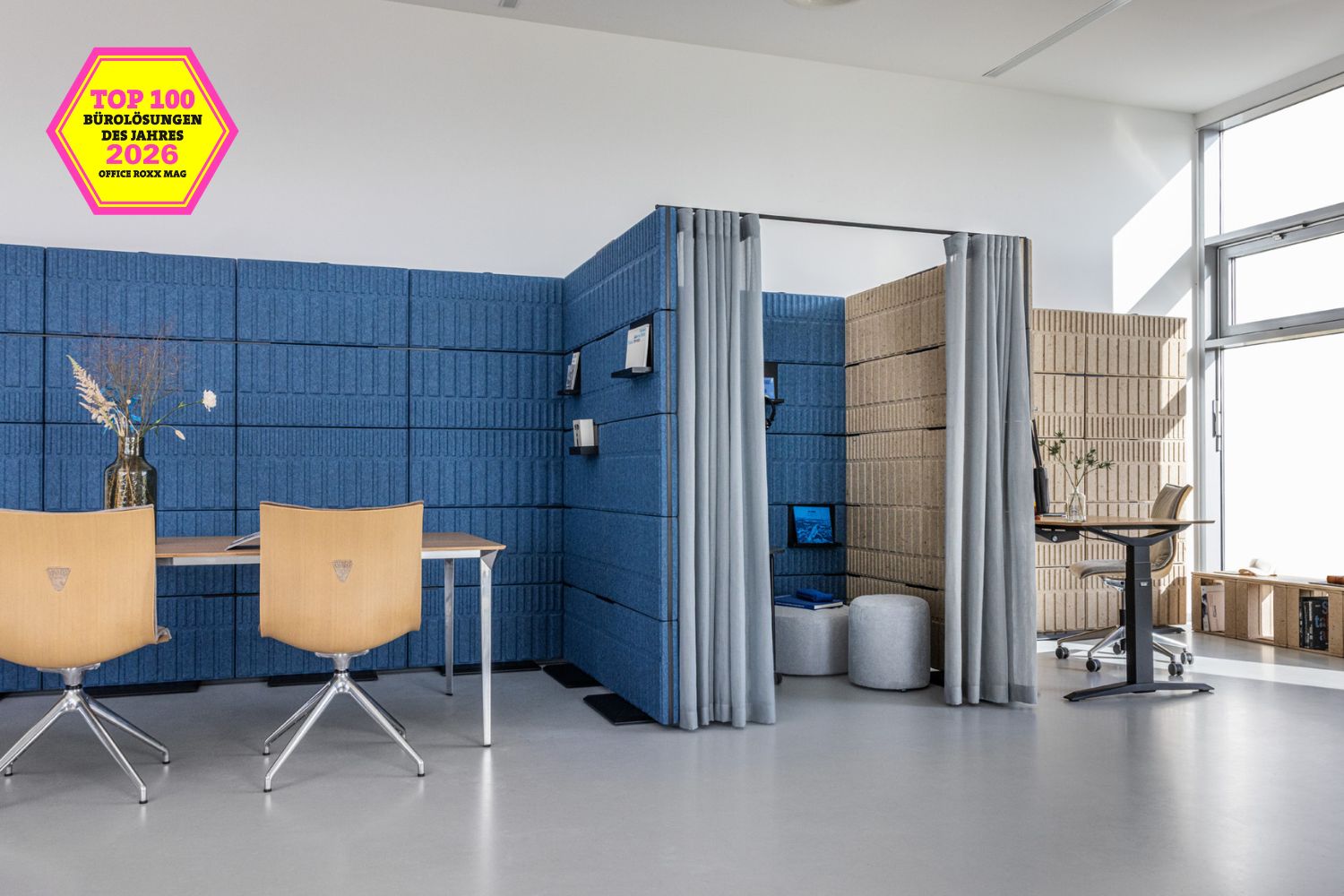
The recognition reflects what VANK_FLIP was designed for: dividing open-plan space without interfering with the building architecture. Individual panels rotate to create openings between zones, allowing a smooth transition between focus and collaboration. The space changes with the needs of the day.
The name FLIP refers to movement, change, and readiness for reconfiguration. Offices are dominated by acoustically hard materials such as concrete, glass, and steel. VANK_FLIP was created as a response to this challenge. The mobile walls introduce acoustic balance without interfering with the building structure.
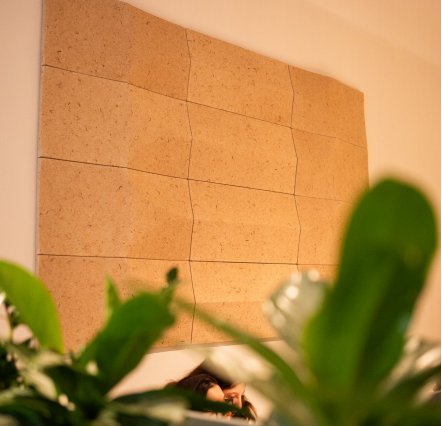
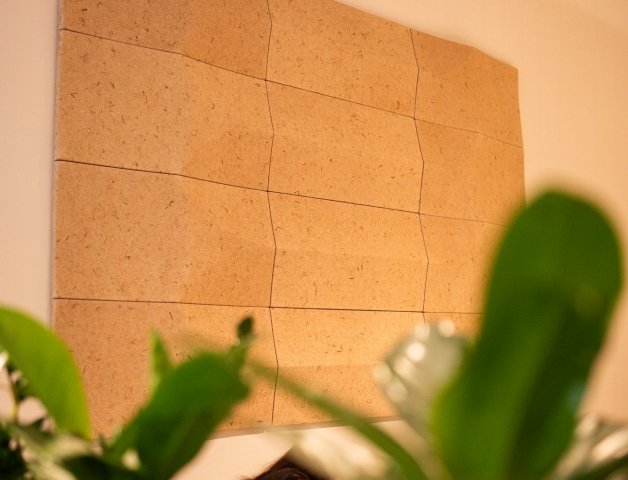
Panels are available in two materials. The first is a biocomposite made from flax and hemp fibres, annual plants that absorb CO₂ during growth and require no fertilisation or intensive irrigation. The second is rPET nonwoven made from recycled PET bottles. Both materials achieve Class A sound absorption according to ISO 354.
The walls can be connected linearly or at 90° and 135°, creating both simple rows and more complex layouts. The three-dimensional BRICKS panels designed by Bidermann+Wide reference brick and clinker forms. Their geometry increases the sound-absorbing surface and improves the acoustic performance of the entire system.
VANK_FLIP works not only in offices. In spaces requiring flexibility and improved acoustics without fixed partitions, such as cafés, restaurants, coworking environments, or residential interiors, the mobile walls can be relocated and reconfigured in a new layout.