Interior design: NFO - Architecture
Project coordination: Primat RD
Client: University of Zagreb – Faculty of Mechanical Engineering and Naval Architecture
Photography: Ante Dvoravić
Project completion: 2025
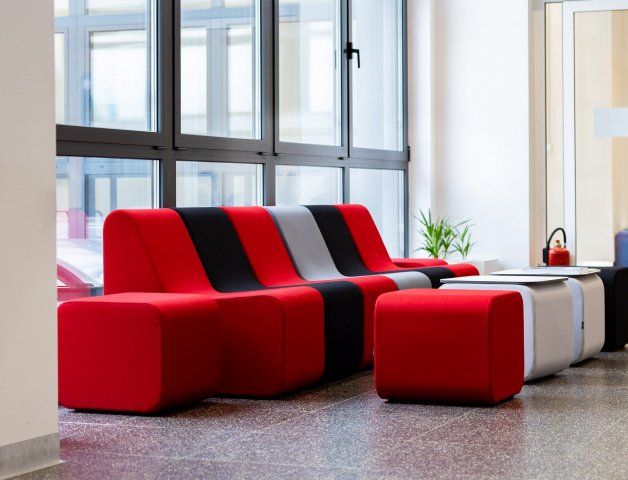
Products: CELOO sound-absorbing chairs, CELOO poufs, CELOO tables
In university common areas, corridors and halls serve not only as circulation routes but also as spaces for short stays between classes. The project addressed three key aspects:
-
introducing clear functions without restricting movement
- breaking the anonymous character of large, uniform surfaces
- ensuring comfort and durability under intensive daily use
The concept developed by NFO was based on preserving the existing architectural structure and complementing it with a functional layer that organises how the space is used.
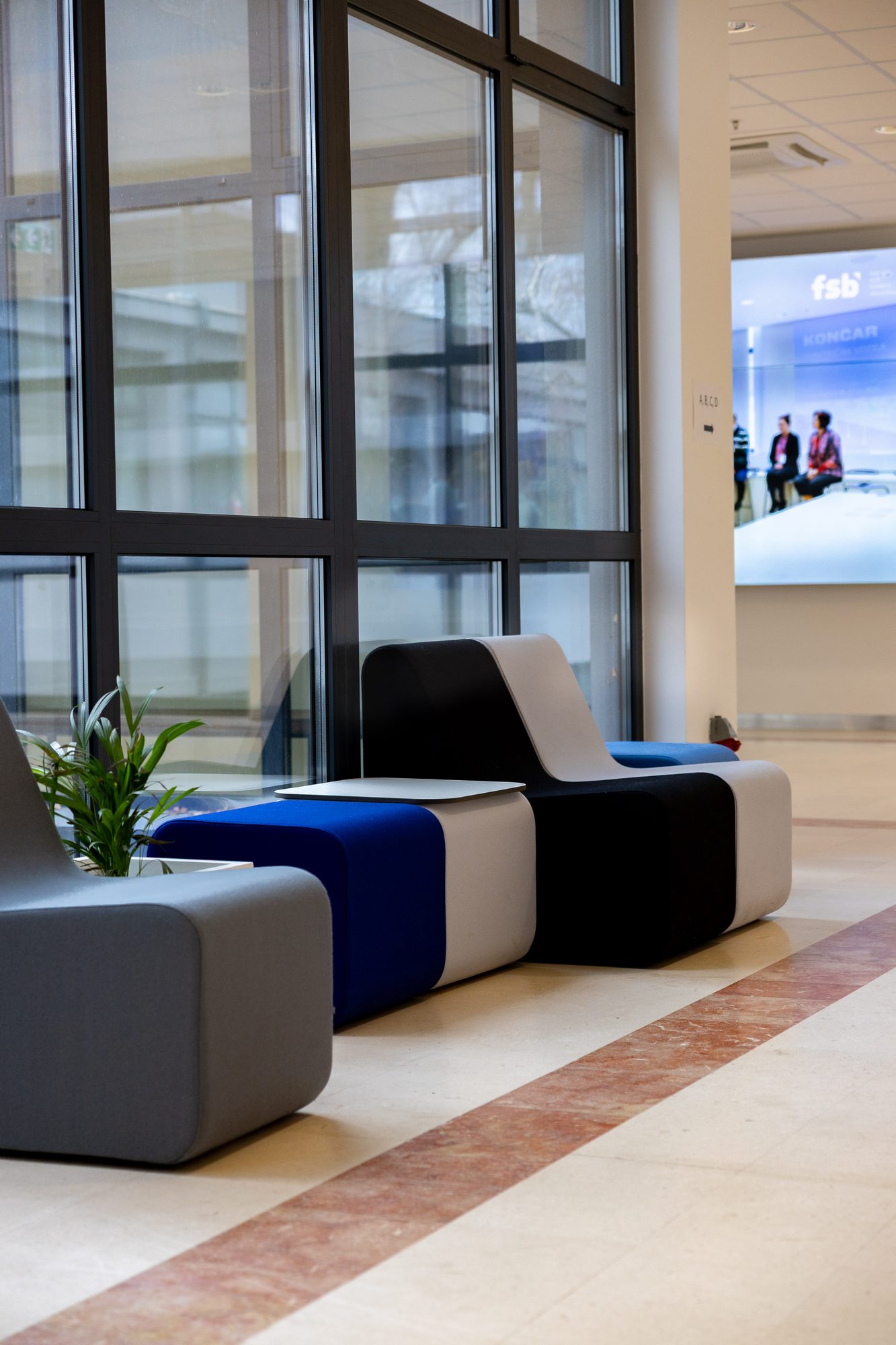
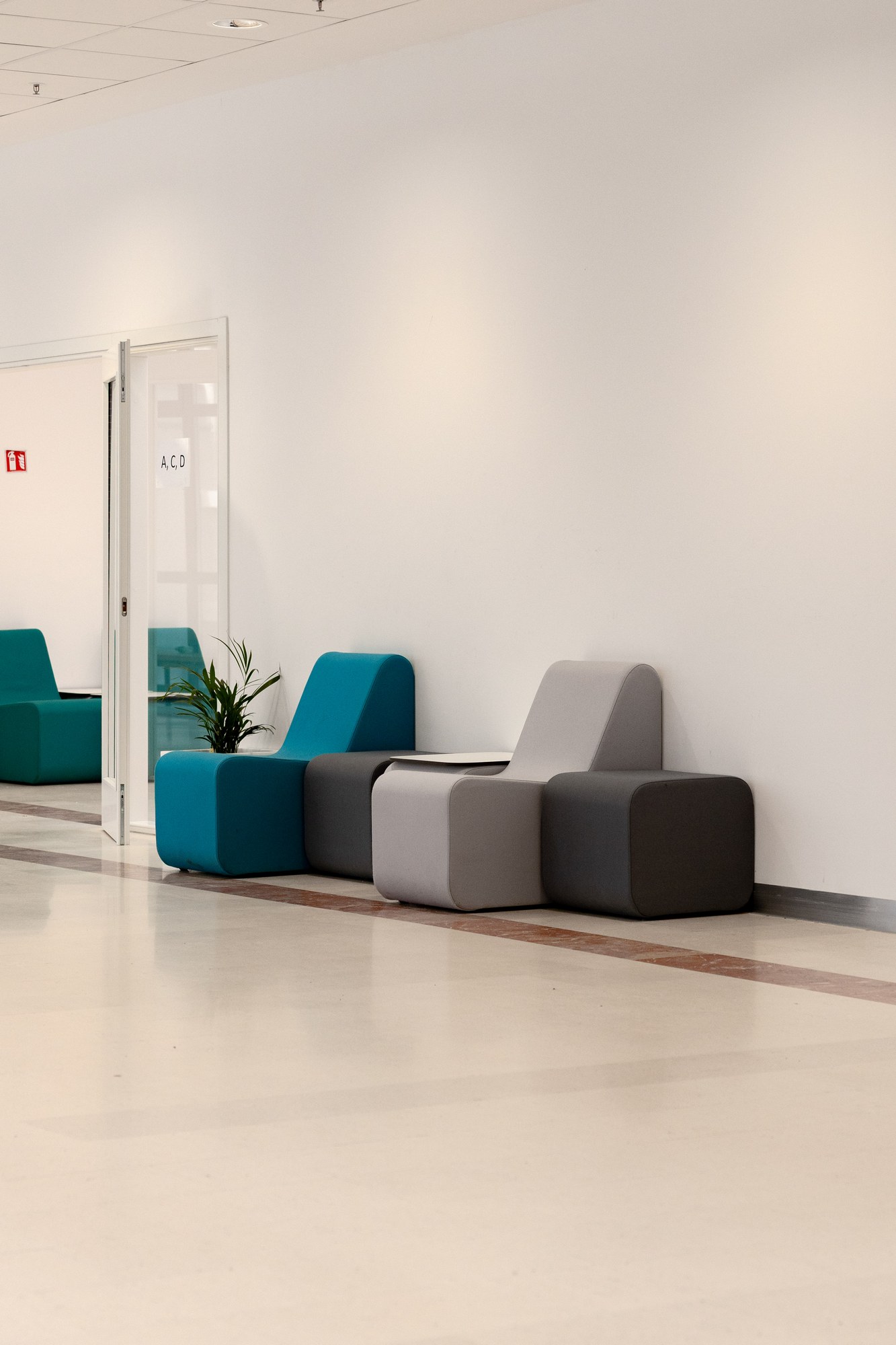
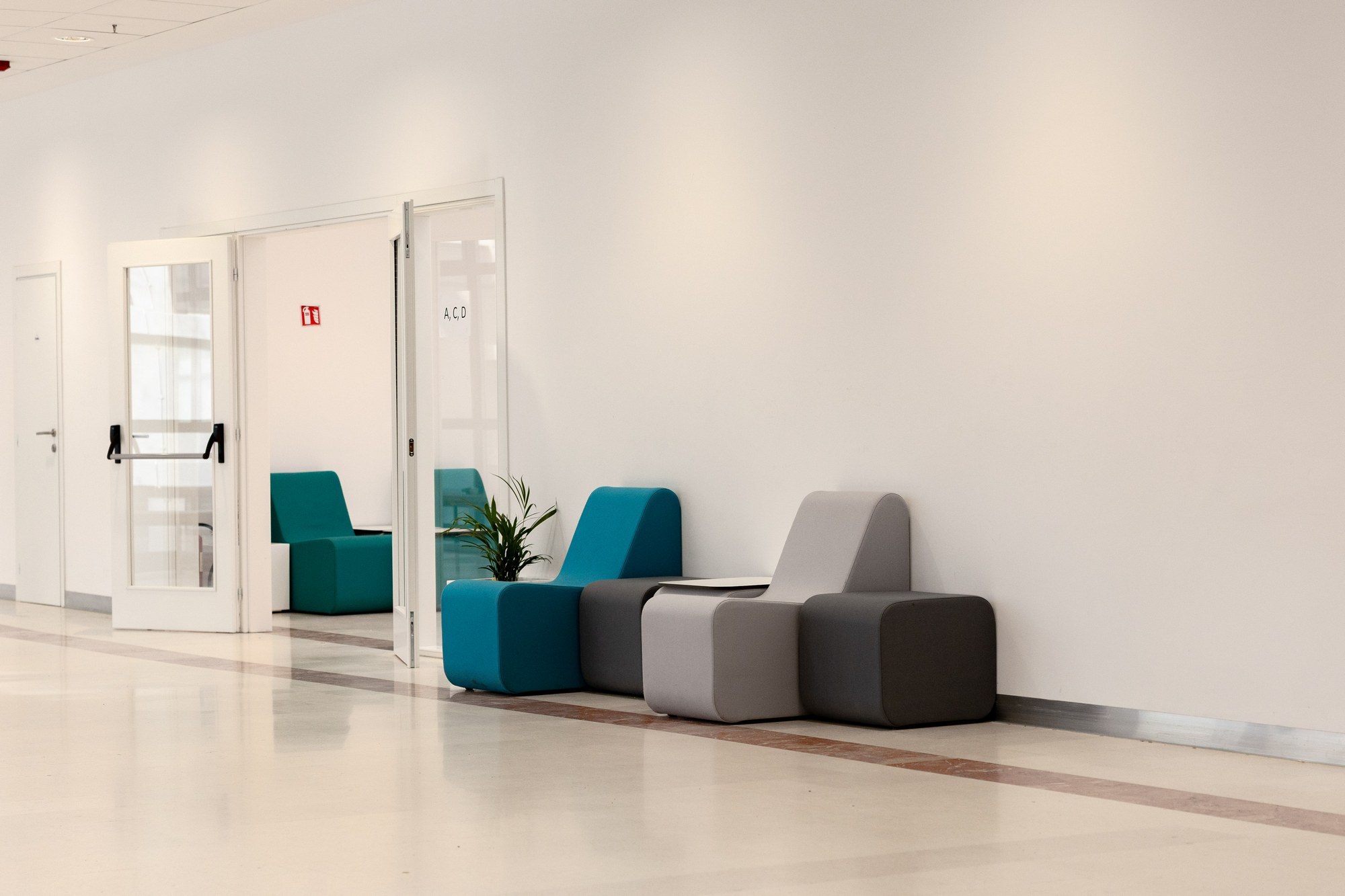
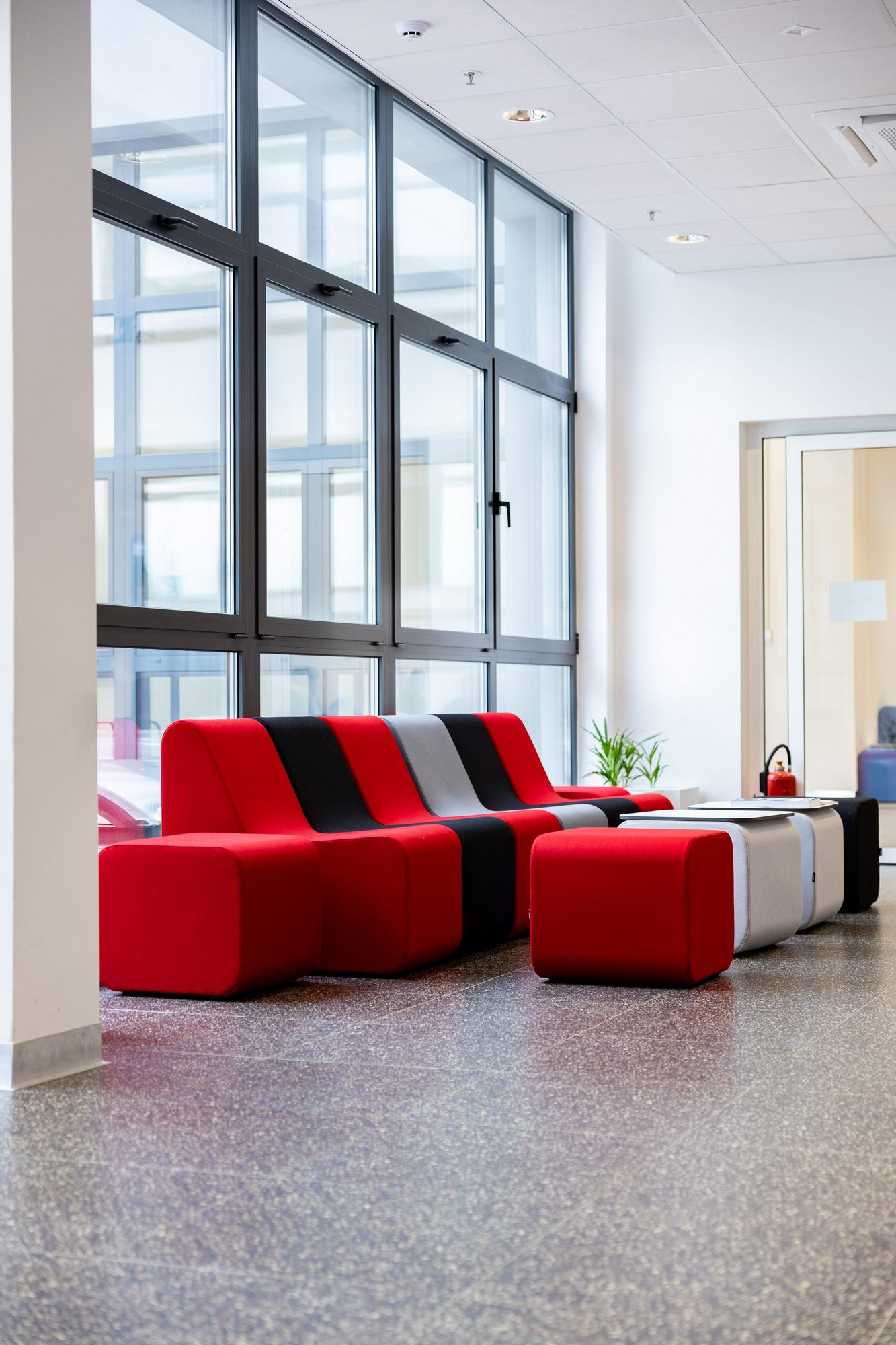
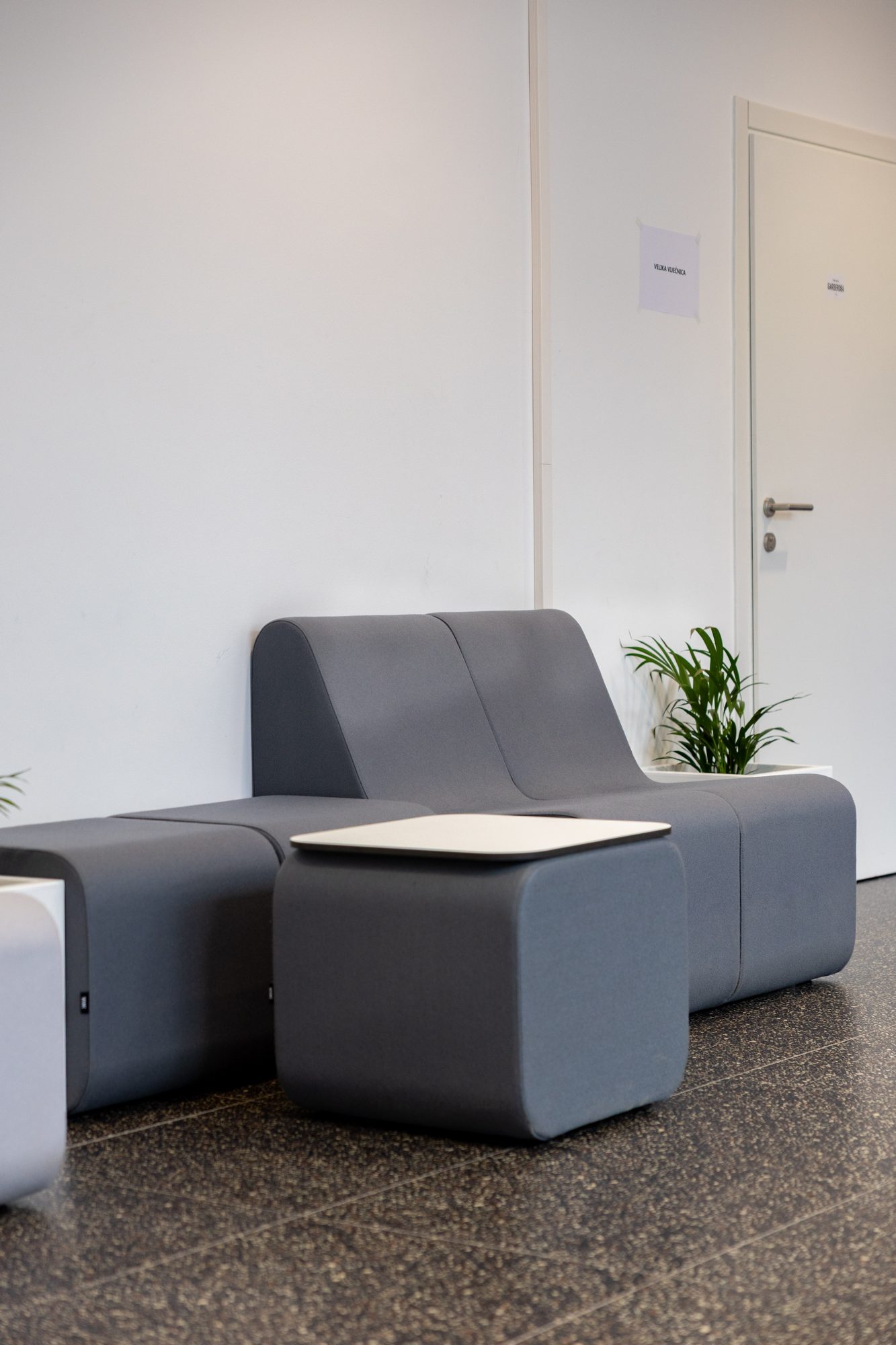
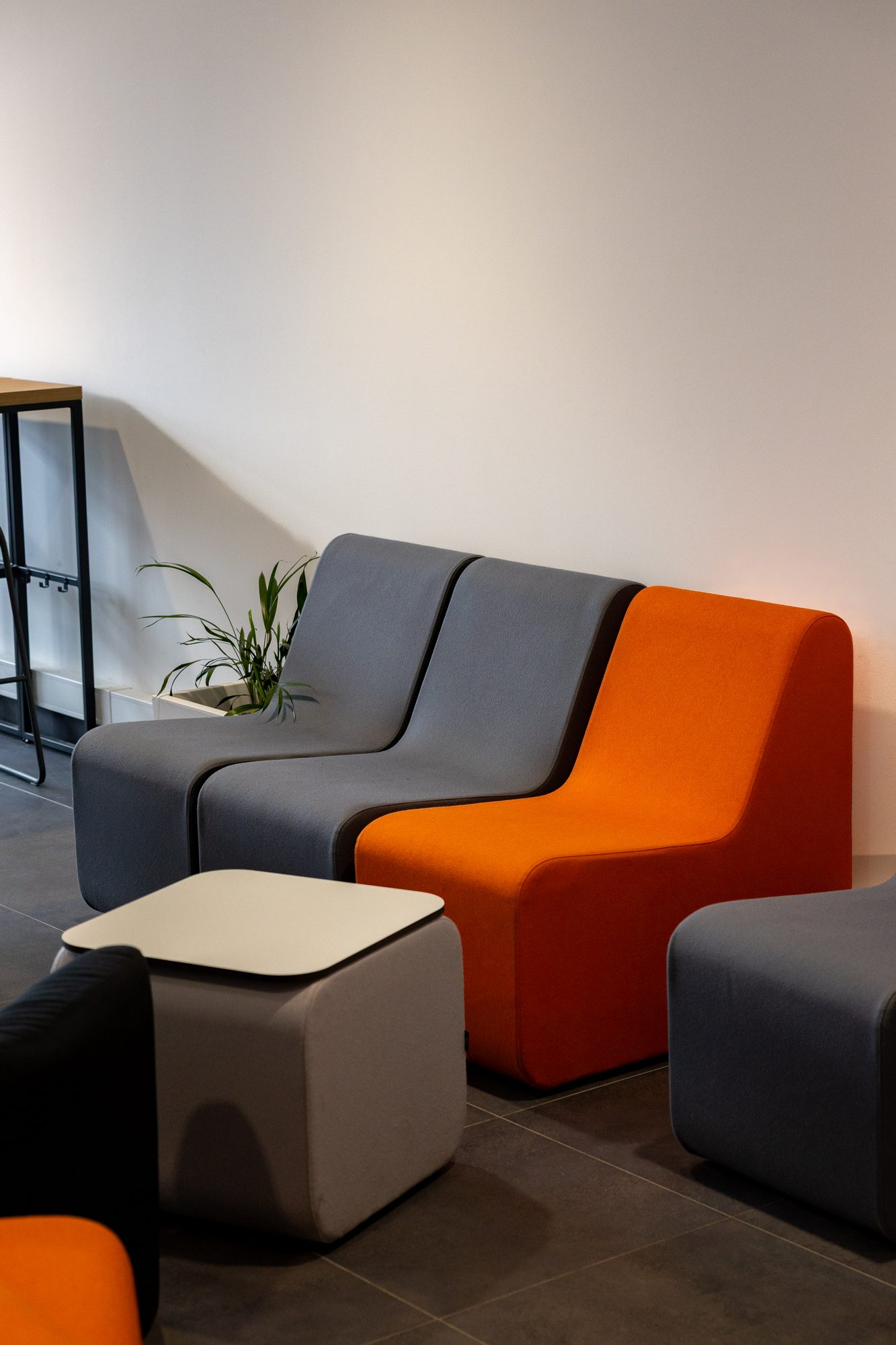
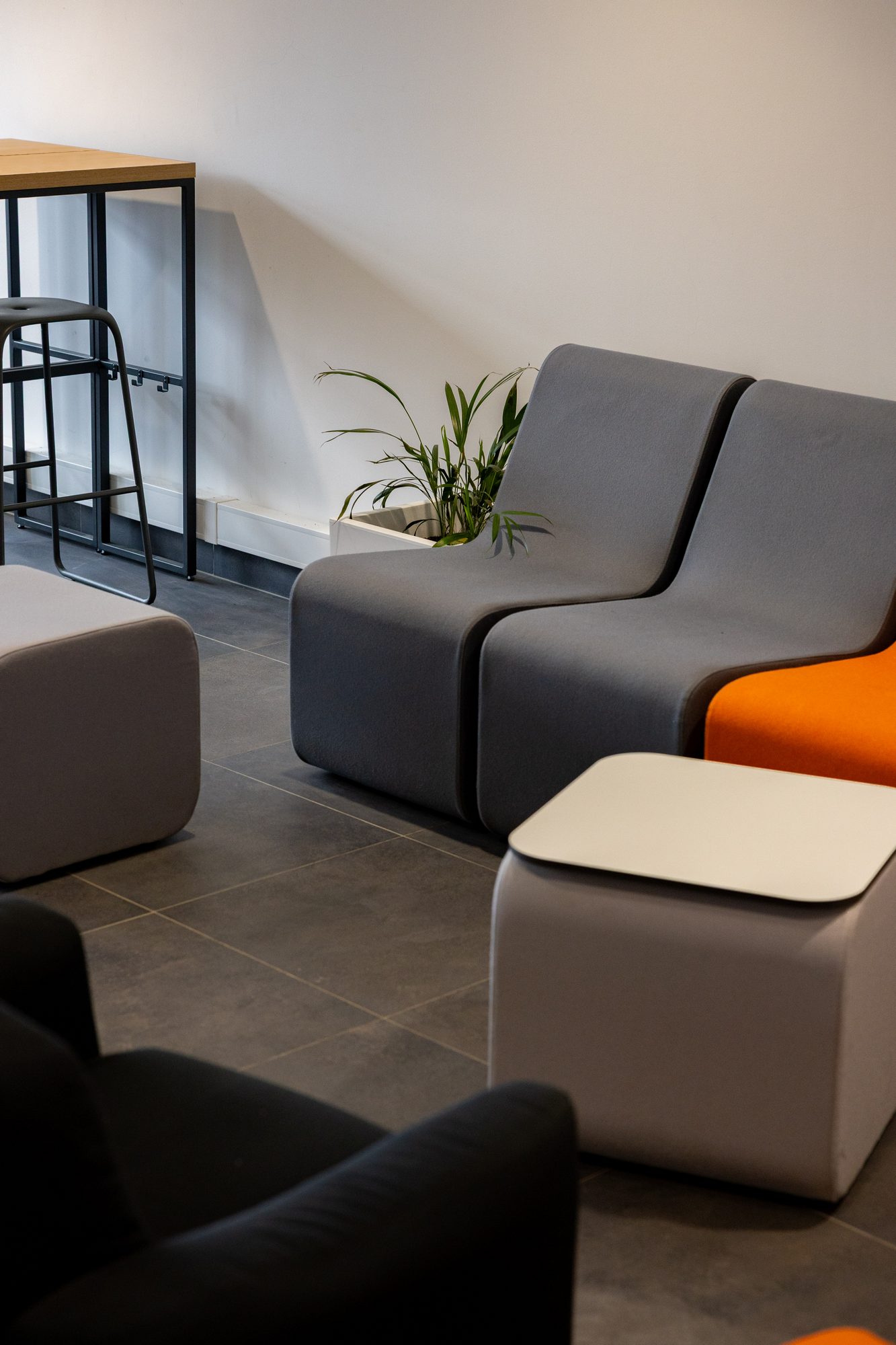
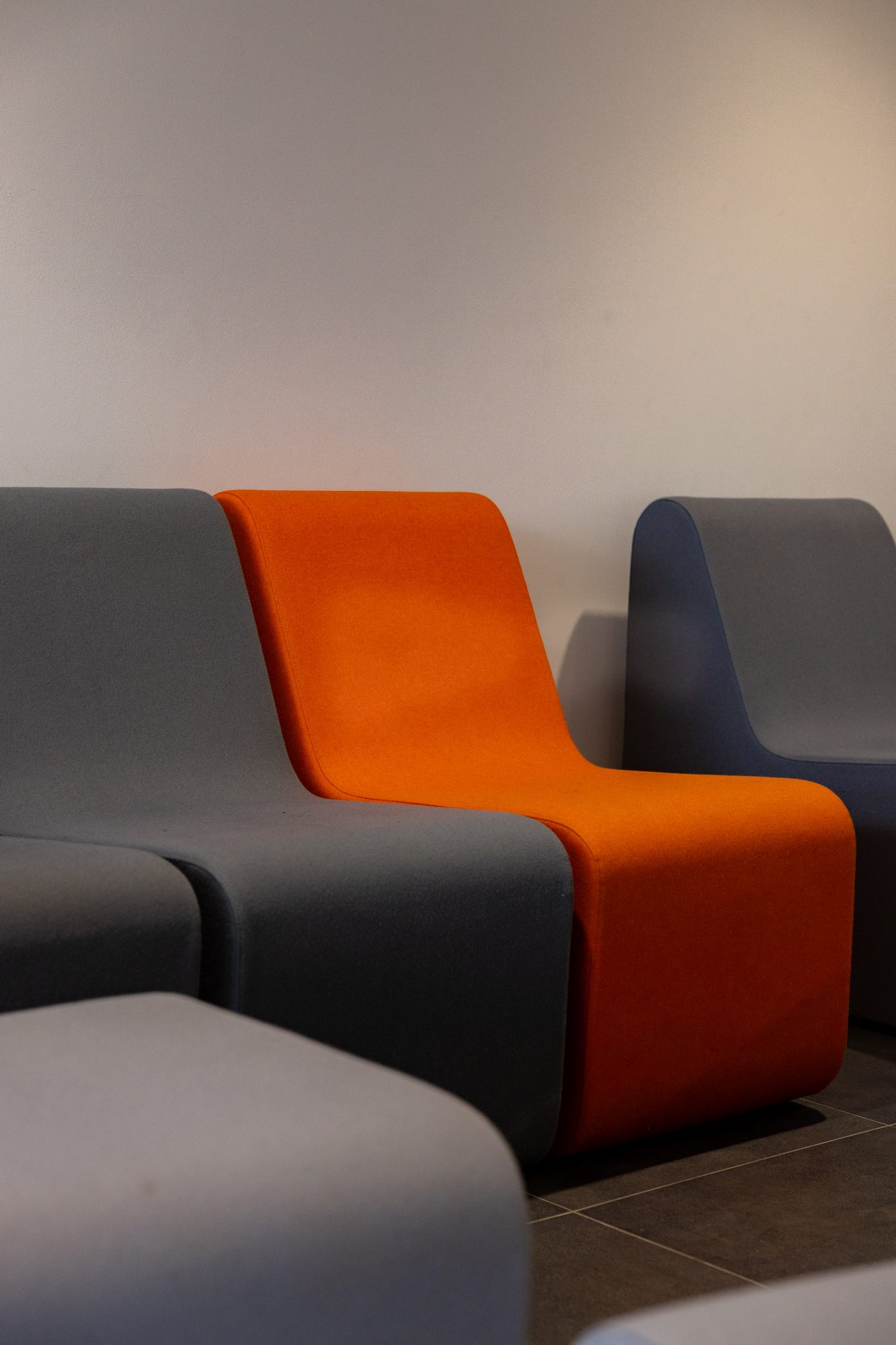
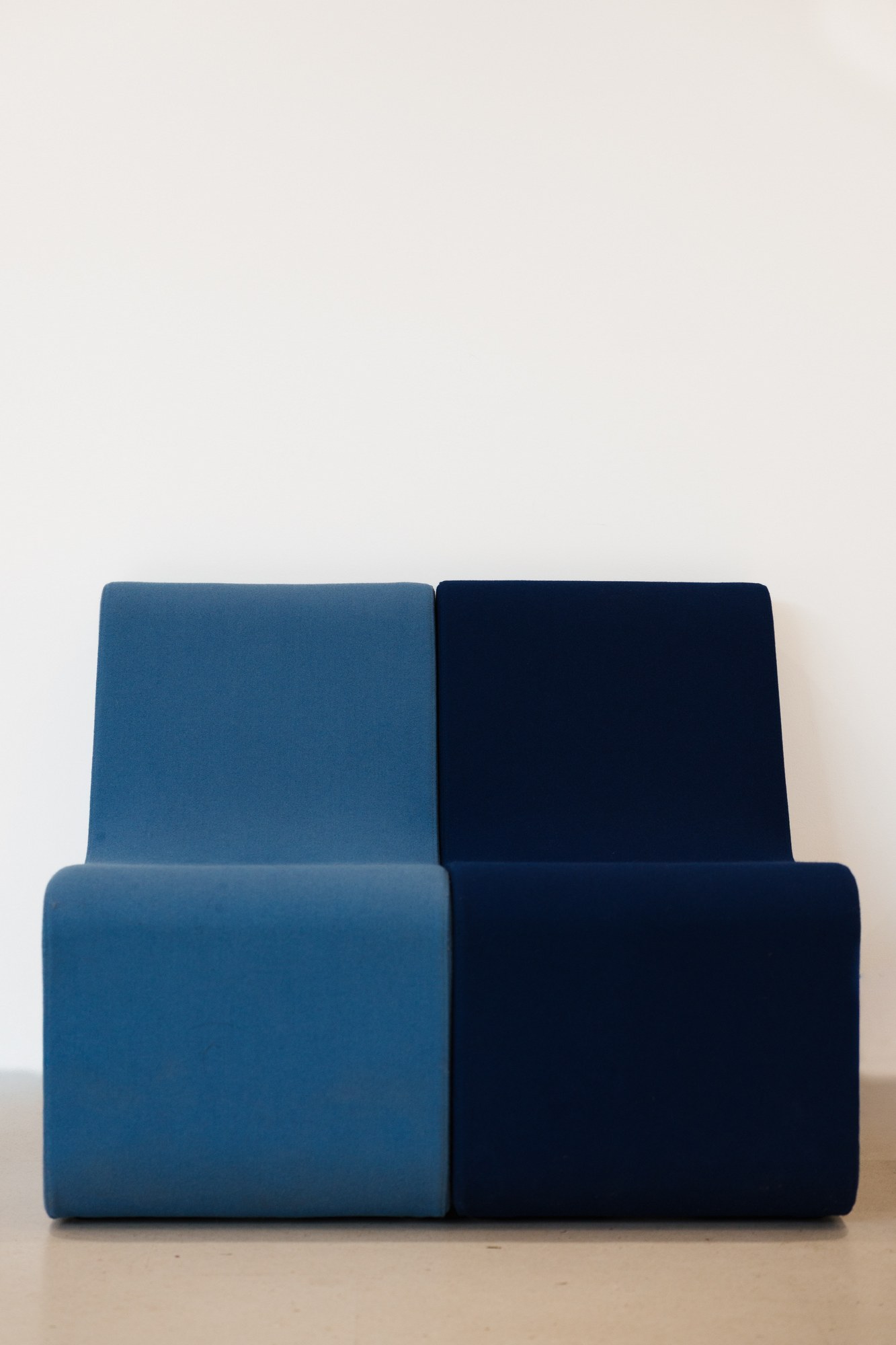
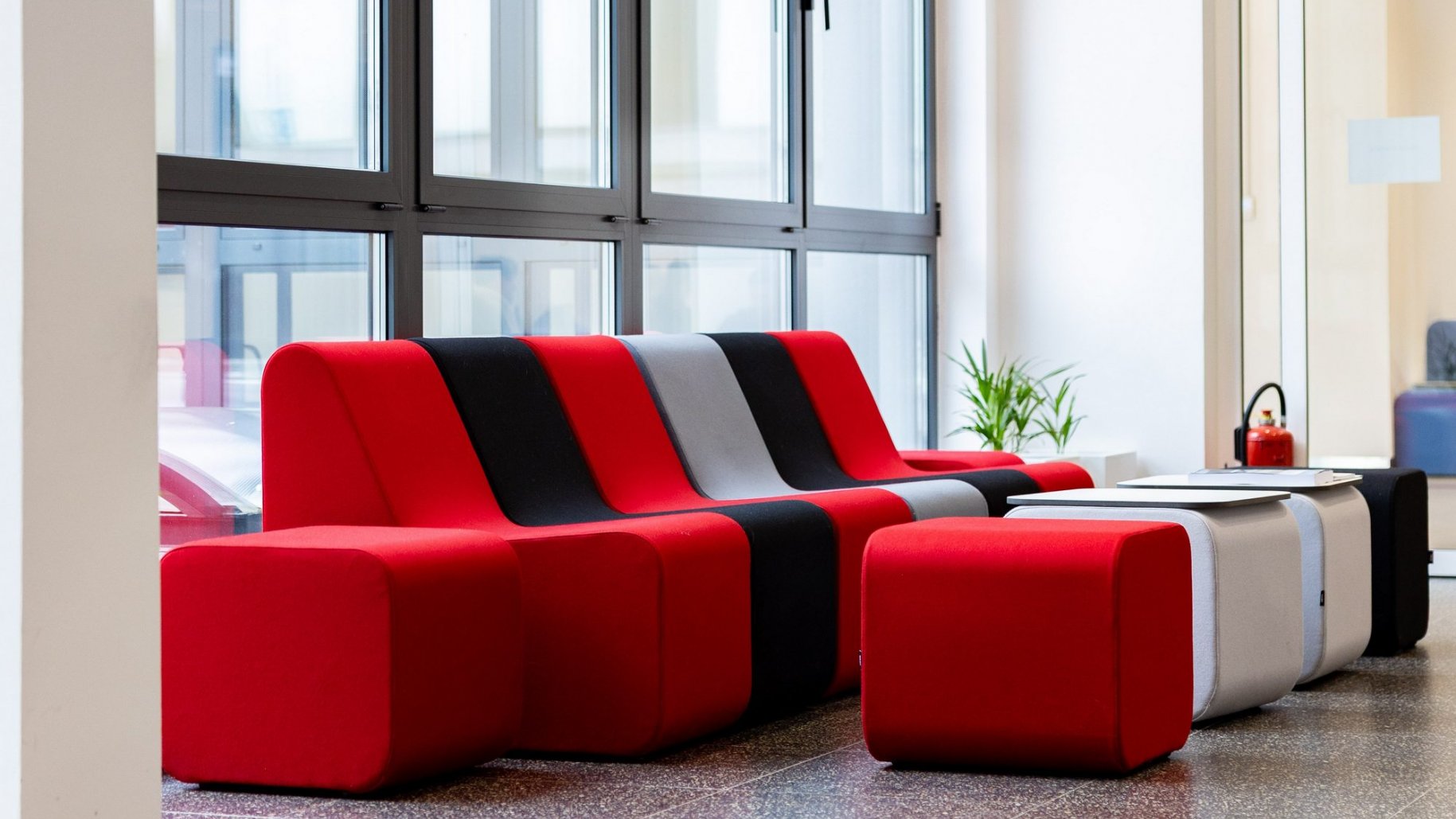
A modular VANK_CELOO collection was introduced, including chairs, poufs and tables designed for educational environments such as university corridors, lobbies and shared areas adjacent to lecture halls.
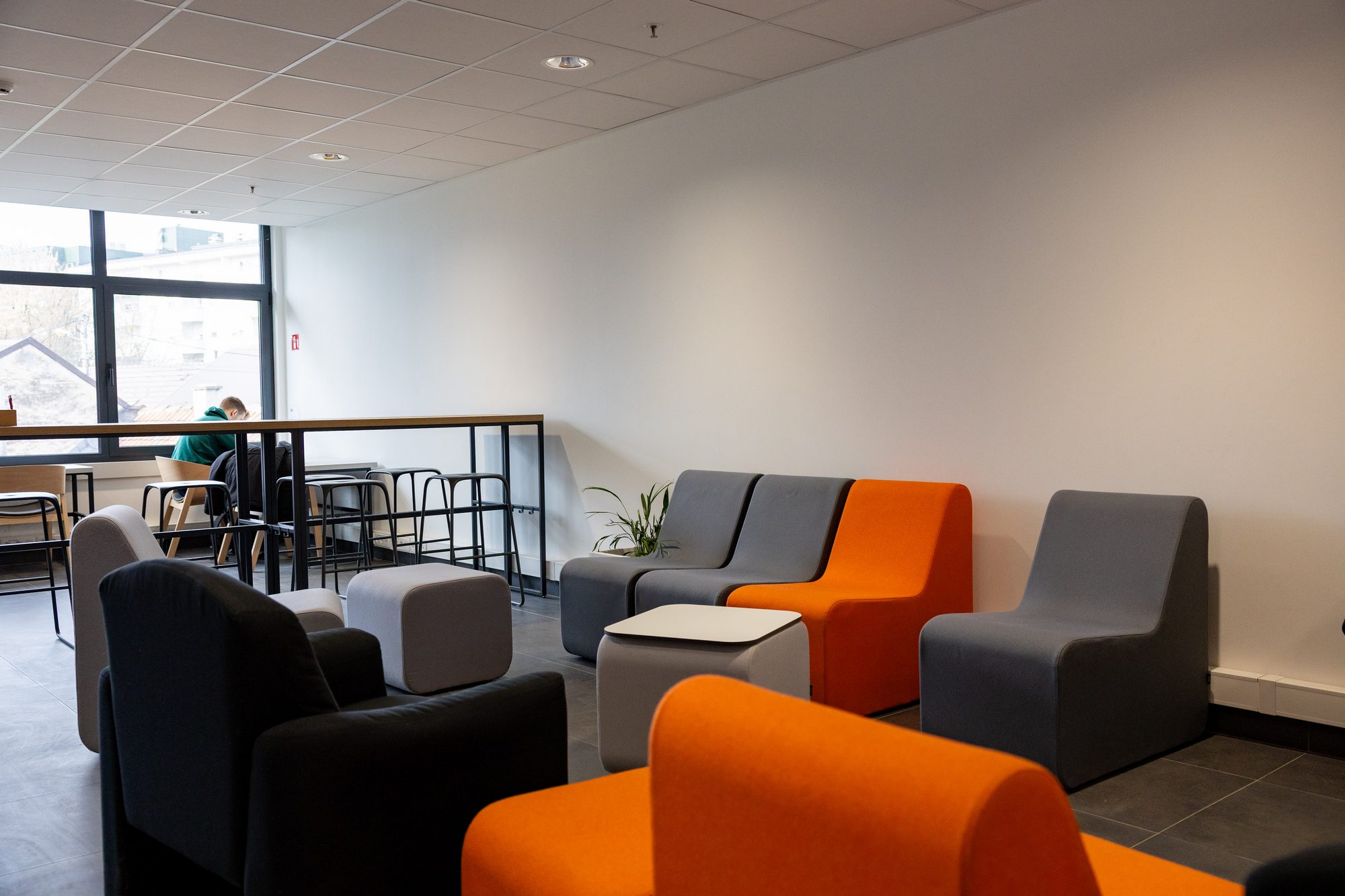
The elements were arranged in small clusters along circulation routes and in zones near lecture rooms and glazed areas.
- These layouts create natural stopping points without interrupting the flow of users.
- Gently reclined chairs support short breaks and the use of mobile devices. Poufs function as flexible seating or auxiliary surfaces. Tables allow users to place laptops or study materials.
- The furniture is designed for public and educational spaces, where durability, ease of maintenance and comfort for multiple users throughout the day are essential.
- The varied Synergy upholstery colours act as a spatial orientation tool, indicating areas intended for use and breaking the uniform character of the architecture.
- Soft upholstered forms partially absorb sound, reducing reflections from hard surfaces.
University circulation areas were enhanced with clearly defined functional zones that respond to the real needs of students.
Corridors and lobbies now serve both as passageways and as places for short stays, rest and informal meetings. The architectural layout remains unchanged, while the way the space is used has become more diverse and intuitive.